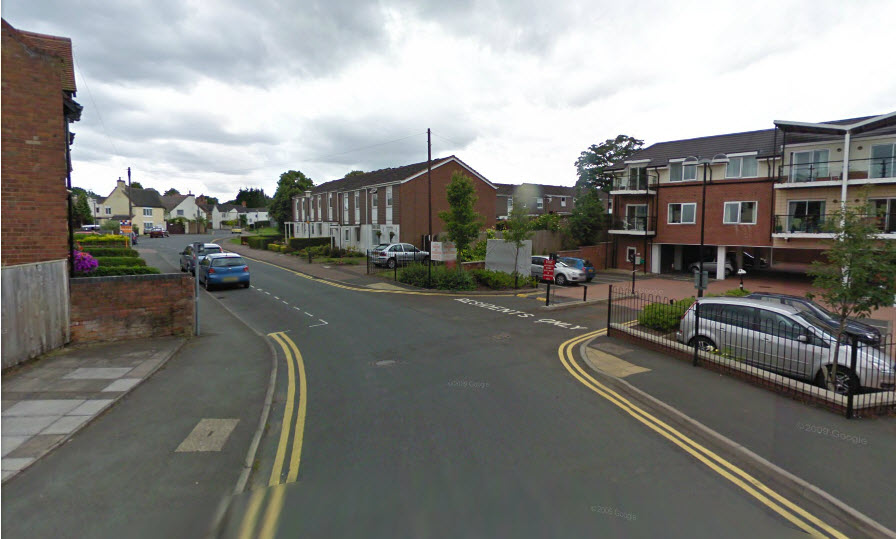
Sunday, 4 October 2015

Conventional Traffic Lights i.e. Not Filtered

This post concerns conventional traffic light controlled junctions. I will cover filtered traffic light junction in the next post.

When turning right at most traffic light junctions, you need to position the car waiting to turn right. This can sometimes be difficult to judge, here are a few tips that will help you decide.

Right Turn Only
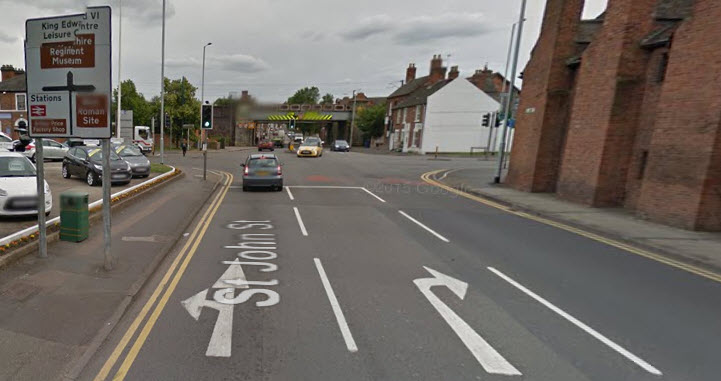
As you approach the above crossroad, it is fairly clear that the right lane is right turn only. On modern roads this is the most common arrangement, but beware of (generally) older ones where the right lane can also proceed ahead (see below). Also the current convention is to pass passenger side to passenger side, look out for arrows which indicate the opposite (again generally older designed junctions). I learned to drive in the early seventies and the convention was to pass driver's side to driver's side. This is safer since you can see better, but less efficient and to be honest I can't really remember it changing.

So considering this image, when the light is green and you have on-coming traffic - where do you wait? Well the first decision is whether to cross the white STOP line. If I were driving the first vehicle then I'd move forward on green (unless something very unusual is happening). However if I were the second or subsequent vehicle, I would only cross the line if I was sure that I could get the back of my car beyond the pedestrian part of the crossing - see next image.


This is to make sure that I am caught is a bad spot when the lights change. As the lead vehicle progresses further into the junction, you may find that there is enough room to move forward. So where do we wait, even I am impatient :-)

The exact position will vary from crossroad to crossroad but here's my simple rule. I will not go too far forward in case I block someone turning right from opposite and I will not go too far right so I don't make on-going traffic drive around me.


This picture demonstrates this fairly well. The blue car is blocking the lane that the white van is in, but it has to turn right - so fine. The blue car could go a couple of feet further right but not too far - remember you can always creep further forward (but NOT back). The white car is just crossing the pedestrian studs, so that looks fine. But the car that has Google's camera should wait here for now

Right Hand Lane can go ahead as well as right


So remembering that some right hand lanes can go ahead, as well as right - the wait position would not be so far right (so you don't block on-going traffic). But everything else would be the same as the above example.

Very often you can't see the opposite road's arrows (blocked by cars or elevation change). In my experience, if your right lane is right turn only then the one opposite is the same. But as ever with driving, proceed with caution and look for the evidence.

Next post I will have a look at filtered traffic light junctions and if anyone wants to take an intensive course in Leicester or Redditch just click one of the links.


Friday, 25 September 2015

What is the speed limit? Part Three

This last section on speed limits concerns that national speed limit, there are actually two. The first national speed limit is 30 mph in a built up area, but it is the second one that I want to explain here.

The first thing to notice about the national limit sign, shown below, is that there is no number on the sign. Also you will see this sign on a variety of different roads, from fast dual carriageways to narrow country lanes. This national speed limit demands a different limit for different vehicles, even a car that tows a caravan will need to observe a lower limit. 
When I see this sign, I think it means use your "common sense". The theoretical limit for a car on the road below is 60 mph, but that would be crazy on this narrow lane - 25 mph maybe too fast. As always you need to drive to the conditions that are apparent. Most of my pupils are very surprised when they enter a road like this one and see this sign. They assume that since they are encouraged to drive reasonably close to other speed limits that I would expect the same here. So I explain that if the county and borough councils had to specify exact speed limits for every road, the cost would be prohibitive. This is because most of the roads in the UK are national, but most of the roads that we regularly drive on are signed up with specific limits. The cost of mounting signs on all of these type of roads would be enormous. Each would need a lamp, therefore an electricity supply, someone would need to maintain them, replace bulbs, clean them etc.


When you join a national speed limit dual carriageway, you should try to get up to about 60 mph (as long as the traffic will allow this. This is so that heavy goods vehicles (which are speed limited) will not catch up and overtake you. If you are driving 50 mph on a clear road, the truck driver will be "forced" to overtake you. The truck will take a while to do this since it is limited to 56 mph (probably), and both lanes of a fast dual carriageway will be blocked (not a good idea).

If you know anyone that wants to learn to drive in Leicester, click the link - same goes for Burton-on-Trent.

Saturday, 19 September 2015

What is the speed limit? Part Two

There are some roads that I find the speed limits difficult to understand, here are a couple of examples.


This is Cricket Lane in Lichfield; there are houses on the left, close to the road and yet the speed limit is 40 mph (at least there are a few repeaters to remind you).


The above picture is Cappers Lane, also in Lichfield and the limit is 30 mph. it really doesn't look like it and two things are true. Most of the traffic on this road will be exceeding that limit and people fail their driving tests every day on this stretch of road. So use the tips from Part One to help work out the limit; a driving test examiner will be quite forgiving if you drive a little below the limit for a short period (while you work it out).

Finally look at the 2 signs below, both show that speed cameras may be around (fixed or mobile). I can't see the point of the one on the right, the one on the left shows the camera sign AND the speed limit - much more informative.


If you are looking for driving lessons in Leicester or an intensive course, why not click on one of the links

What is the speed limit? Part One

Well I can't believe that it is almost four years since I wrote one of these Learn To Drive Tips. Anyway I hope some of you will enjoy reading and may even learn a little bit.

Question: How do the speed change signs work in the UK? What do I even mean by this? Let's clarify, the images below are all taken from the same road in Lichfield. PS I love Google Street View :-)


In the picture above there are two 40 mph signs; notice that they are fairly large and there's one each on posts on right and left side of the road - opposite each other. This is typically how a change is notified to the driver. So the speed limit will be 40 mph until the next change sign on this road or when you turn off into a different one.


In contrast, the above image shows a 40 mph repeater; this is not a change but a helpful reminder of the current speed limit. Notice that the sign is fairly small and although there is one on the LHS, there isn't one on the right.


Personally I would like to see a few more of these, but there seems to be little consistency with repeaters; some roads have a repeater every 100 yards and sometimes you can drive for miles and not see one. They seem to happen more often when a limit has been changed. So a road that was previously signed as national speed limit and has been changed to 50 or 40 mph, you are much more likely to see repeaters.


The last shot shows a view into a side road and you can clearly see two change signs. So here the speed limit is changing (from 40 mph) to 30 mph. Incidentally if you were to look at the reverse of these signs, you would see two 40 mph signs - showing the change in the other direction.

So how can this help a new driver.

First of all, look out for change signs and repeaters. Nobody will see every sign but if you try, you will see more. Notice that most appear at junctions, either before a junction or just after. Don't forget that they are also painted on the road sometimes, see below.


If you find yourself on a road and you are not sure what the speed limit is, then look for evidence. The best way is to look down a side road and see if there are any change signs. If there are no change signs then the limit should be the same on both roads. However if there are change signs then you certainly know that the limit on the road you are on is different and this will always help to work it out.

Other clues would be:

Are there lampposts? If there are none, then this indicates national speed limit - although some of these roads have a few lampposts to illuminate junctions.
Is it a built up area? Houses close to the road indicate 30 mph, although some could be 20 mph (as above). Footpaths on both sides of the road would also indicate a built up area.

For intensive driving courses, why not check out the website? We now have excellent instructors in many areas, prices are available here.

Tuesday, 8 November 2011

Lichfield Driving Test Centre Exit Left

Ok, so your taking your test in Lichfield - what problems do the first few minutes present?

Going left you proceed down really narrow and bendy road - there are usually cars parked on the left, so you need to be in 1st gear and looking well ahead.

Further down this really narrow road, there's a T-junction where you really need to stop to look both ways - generally you will asked to turn right.


Having negotiated that junction, you will be asked to turn left at the STOP junction - of course the examiner will not use that word. You must stop and mainly look right to give way - however a few other things to watch:

  • The corner is reasonably tight, so don't get too close to the left kerb, there is a chance of mounting it if you turn too soon.
  • There may be vehicles turning right into your road - they can surprise you, so look left as well as right (as you should always do).
  • There's a light controlled pedestrian crossing as soon as you turn left and you probably will not have time to see this after you turn. So make sure that the lights are green before you set off - keep an eye out for people pressing the button.
So now your test in under way and assuming that you have taken care, you will be off to a good start.


Next time we will look at turning right out of the Lichfield test centre.


For intensive driving courses, why not check out the website? We now have excellent instructor all over the Midlands area, details are available here.

Friday, 26 August 2011

The first 3 minutes of practical test often determine result

Most people are nervous before any test, interview, sports game etc. - It would be really unusual if this wasn't the case. I have had drivers going to test and be unable to control their left foot for the first few minutes; some have been sweating profusely, unable to speak and many other symptoms.
Once the test gets under way many have said that these initial nerves subside very quickly and they get "into a good rhythm". Unfortunately this is sometimes too late, they have already made one serious error and effectively failed the test. I am not a medical person but I guess there is an adrenalin rush as part of the old "fight or flight response" to perceived "danger" - we all want to pass so much. How can a driving instructor assist with this issue?

1. Make sure that the pupil is actually ready - there is a tendency to let learner drivers go to test when they could pass, but not actually ready. It is an expensive business and that extra half a dozen lesson is not what they want to hear. I believe that if they are ready, their confidence level is higher and therefore they don't feel the anxiety so much.
2. Perform several mock tests where you behave exactly like an examiner i.e. courteous but fairly cold, quiet and completely unsupportive.
3. Repeatedly explain to the pupil that there is no rush in the test; it will last 38 to 40 minutes and they will travel for between 7 and 10 miles. Ask them "can you drive?", "can you concentrate for 40 minutes?" Make it sound really easy, by now you should know that they are ready and should pass.

Next blog post we will discuss some of the characteristics of a couple of test centres which make the start of the test really important.

Saturday, 23 April 2011

Defensive Driving

Practicing defensive driving will help keep you safe whether you have just passed your driving test or you have been driving for years. So what exactly is defensive driving? How do you drive defensively?
  • Awareness - what do you see ahead, behind and to each side?
  • Planning - what's going to happen next?
  • Anticipation - what happens if?
  • Staying In control - always drive within your limits, if you start to feel out of control you are probably driving too quick for the conditions - so check behind and slow down until it feels safer - trust your instincts.
  • Drive responsibly with care, consideration and courtesy.
A few examples (there are many):
You see railings up ahead, there are likely to be pedestrians crossing - we sometimes see the railing before the crossing. What if there are people about to cross? If you are expecting it, you will be prepared for it - no suprise - keep control.

You see a green traffic light, we all know it will change to amber then red, we just don't know when. So anticipate it changing and check in the rear and be ready to stop smoothly or carry on if it doesn't change.

Similarly you see a bus ahead, what is it most likely to do - stop at a bus stop - so don't be surprised when it does.

Traffic calming is meant to slow traffic doen in urban areas, so try to keep steady speed around 20 mph, this will give you plenty of time to scan ahead and to the sides and react comfortably to the inevitable events such as pedestrians crossing, cars pulling away etc.

More posts soon, meanwhile check out these sites if you are looking to learn to drive soon